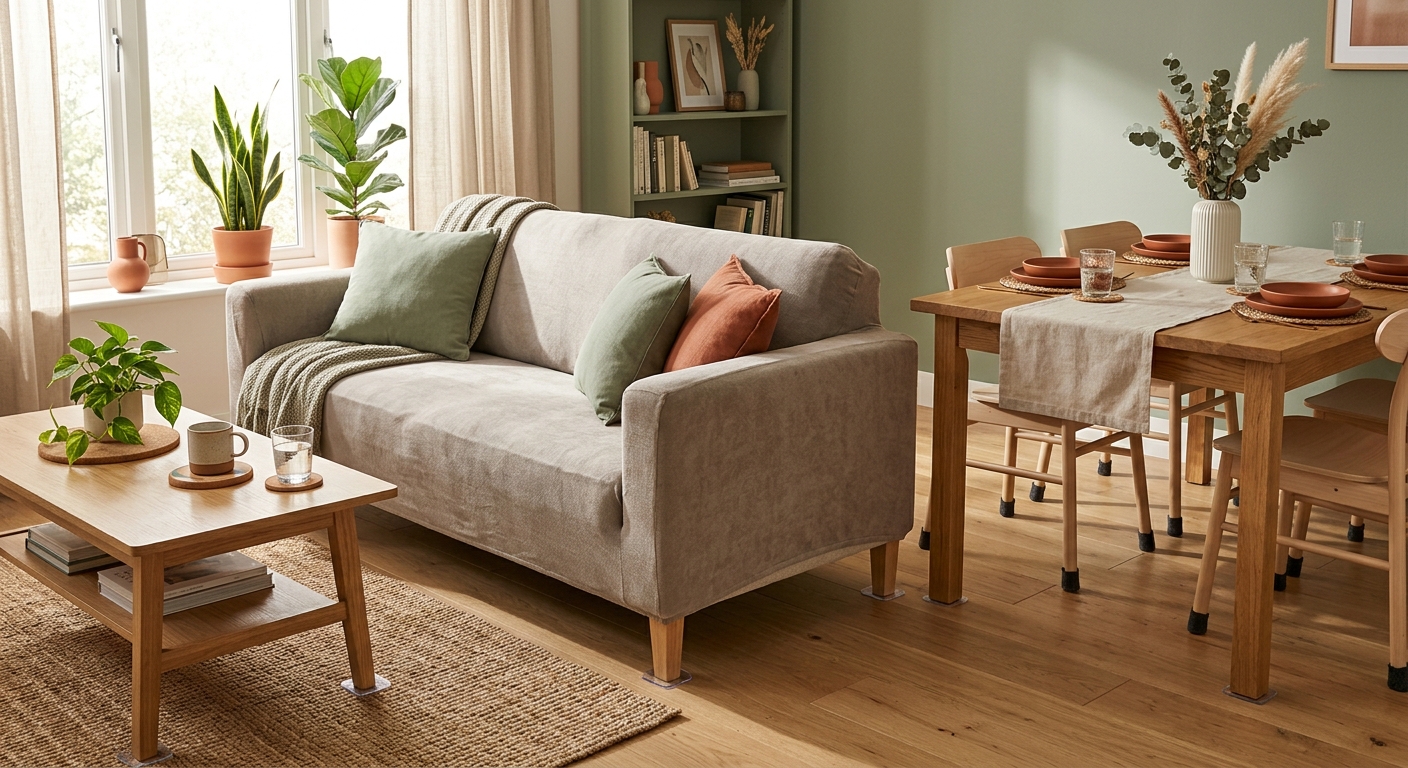
A sofa cover can either make your living room look intentionally styled or accidentally messy, and the difference usually comes down to three things: measurements, material, and fit style. If you have ever ordered a slipcover online only to find it pooling at the base or riding up every time someone sits down, you already know how frustrating this can be.
We have spent years making protective covers for real homes, and this guide walks through everything we wish more people knew before clicking "buy" on a sofa cover.
Start With Accurate Measurements
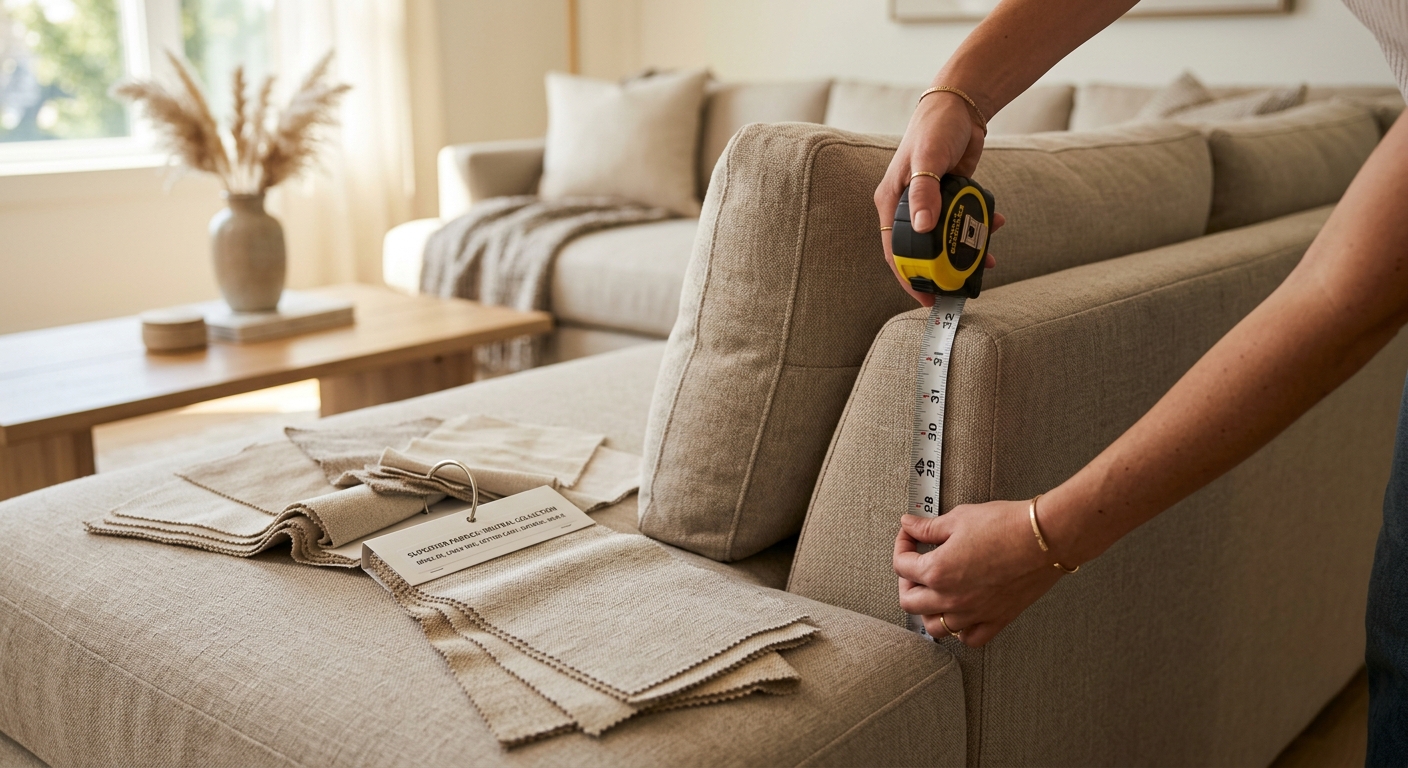
This is the step most people rush through, and it is the reason so many covers end up returned. A sofa cover is only as good as the measurements behind it.
What to Measure
- Width — measure from the outside of one armrest to the outside of the other
- Depth — from the front of the seat cushion to the back of the backrest
- Height — from the floor to the top of the backrest
- Arm height — from the floor to the top of the armrests
For example, if you have a standard three-seat sofa, widths typically range from 70 to 90 inches. A cover made for a 72-inch sofa will look noticeably different on an 84-inch model, even if both are technically "three-seaters." Always check the actual dimensions rather than relying on the seat count alone.
Choose the Right Fabric for Your Life
The fabric you choose should match how your sofa actually gets used, not how you imagine it being used.
Common Fabric Options
- Polyester spandex blends — stretchy, form-fitting, and good for irregular sofa shapes
- Cotton and linen blends — breathable and natural-looking, best for low-traffic formal rooms
- Velvet — adds texture and a more elevated look, ideal for accent pieces
- Jacquard weaves — textured and durable, good for households with regular use
If you have kids, pets, or frequent guests, a polyester-spandex blend is usually your best bet. It stretches to hug the sofa shape, resists wrinkling, and holds up well through repeated washing. A family with a golden retriever that treats the couch as a second bed, for instance, will get far more mileage from a stretch-fit polyester cover than from a linen one that shows every crease.
Understand the Different Fit Styles
Not all slipcovers are constructed the same way, and the fit style affects both appearance and how easy the cover is to put on.
Fitted Slipcovers
These are cut and sewn to hug the exact contours of a sofa, including separate cushion covers. They look the most tailored but require more precise measurements.
Stretch Slipcovers
Made from elastic fabric blends, these pull over the sofa and cling to its shape. They are more forgiving of measurement errors and easier to install, which makes them a popular choice for renters or anyone updating furniture without buying new pieces.
Loose-Fit Covers
These drape over the sofa without hugging every curve. They are the easiest to put on and take off, which makes them convenient for frequent washing, but they can look less polished in a formal setting.
Pro Tip
If your sofa has an unusual shape — a chaise attachment, oversized rolled arms, or a reclining mechanism — a stretch slipcover will almost always fit better than a fitted one designed for standard dimensions. Stretch fabric compensates for shape irregularities that precise measurements alone cannot fix.
Consider Maintenance Before You Buy
A cover that looks great but requires dry cleaning is not practical for most households. Before purchasing, check:
- Whether the fabric is machine washable
- Recommended wash temperature (cold wash preserves stretch fabrics longer)
- Whether the cover can go in the dryer or needs to air dry
- How the cover holds color after repeated washing
A cover you wash once and then avoid washing again because it is inconvenient defeats the purpose of having a protective layer in the first place.
Match the Cover to Your Room's Style
Beyond function, a sofa cover is a design opportunity. Neutral tones like beige, taupe, and soft gray work in almost any room and are easiest to accessorize around with throw pillows. Darker tones like charcoal or dark grey hide stains better in high-traffic households but can make a small room feel more closed in. If your room already has a lot of pattern or color, a solid, textured cover like a jacquard or velvet slipcover in a neutral shade will balance the space rather than compete with it.
Conclusion
Choosing the right sofa cover comes down to knowing your sofa's exact dimensions, picking a fabric that matches your household's daily reality, and understanding which fit style will actually stay in place. Get those three things right, and a slipcover stops being a stopgap and starts looking like it was made for your sofa from the beginning.
If you are ready to find a cover that fits your space and your life, take a look at our sofa cover collection — every piece is built with real households in mind.