Outdoor furniture deals with a level of exposure that nothing indoors has to face — direct sun, rain, humidity, temperature swings, and in many climates, snow. Even furniture marketed as "weather-resistant" benefits enormously from proper covers and a basic seasonal care routine. Here is what actually works.
Why Outdoor Furniture Wears Out Faster Than Expected
Manufacturers often use "weather-resistant" rather than "weatherproof" for a reason — most outdoor materials can handle occasional exposure but degrade with constant, uncovered exposure over months and years. UV rays fade and weaken fabric fibers. Moisture that gets trapped under cushions promotes mold and mildew. Metal frames left uncovered are prone to rust at joints and welds. None of this happens overnight, but it compounds season after season.
The Core Rule: Cover When Not in Use
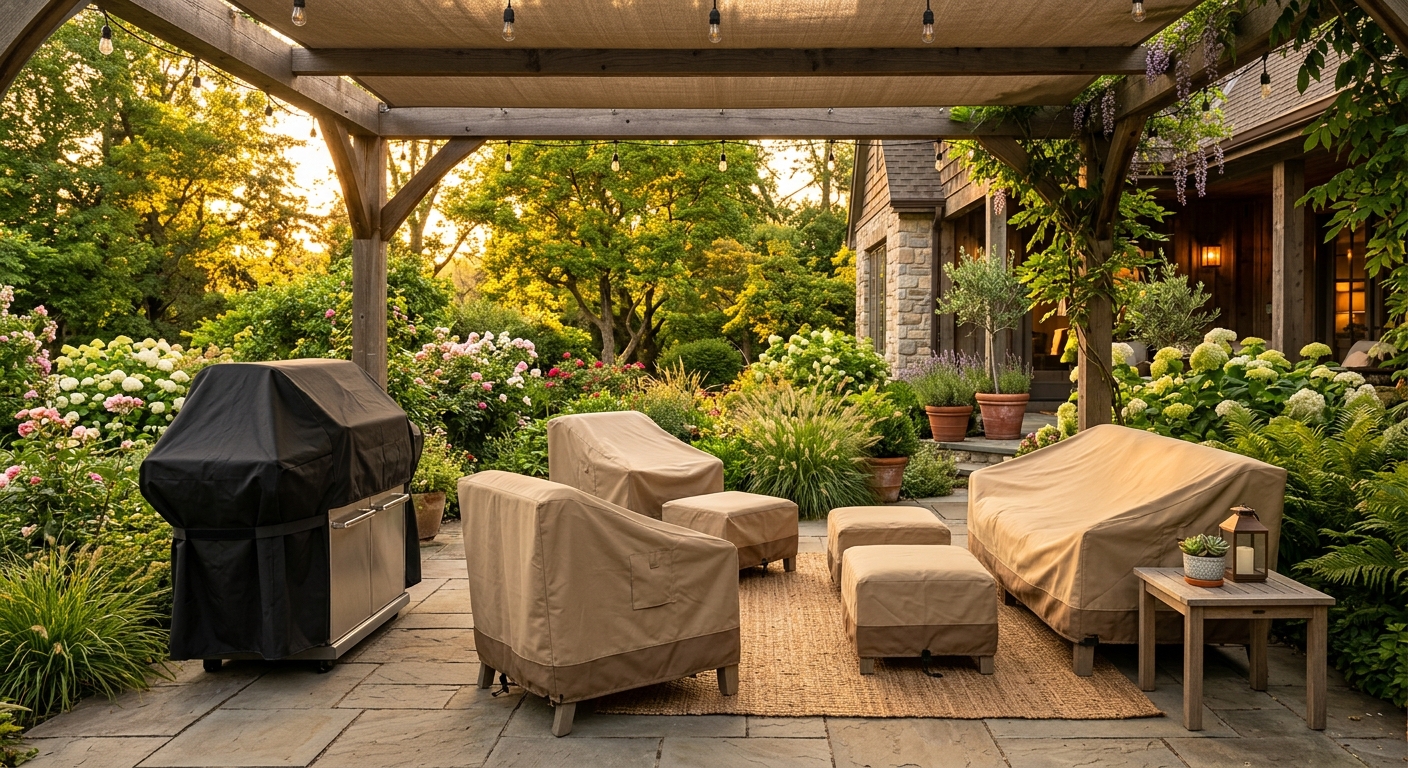
The single most effective thing you can do for outdoor furniture is to cover it whenever it is not actively being used, not just during storms or winter storage. A quality weatherproof cover — for a dining set, sectional, chaise lounge, or grill — blocks UV exposure, keeps rain and dew off the surface, and prevents the freeze-thaw cycles that cause plastic and rubber components to crack.
What to Look for in a Cover
- Waterproof, breathable fabric — fully sealed vinyl traps moisture underneath and can promote mold
- UV-resistant coating — prevents the cover itself from becoming brittle
- Secure fastening — drawstrings, buckles, or velcro straps keep covers from blowing off in wind
- Proper fit — a cover that is too loose flaps in wind and lets water pool; too tight and it can tear at the seams
Seasonal Furniture Care Checklist
Spring
- Remove covers and inspect furniture for any winter damage — rust spots, cracked plastic, or mildew
- Wash cushions and fabric surfaces before the season's first heavy use
- Check and tighten any loose bolts or joints on metal frames
Summer
- Cover furniture during extended periods away, such as vacations
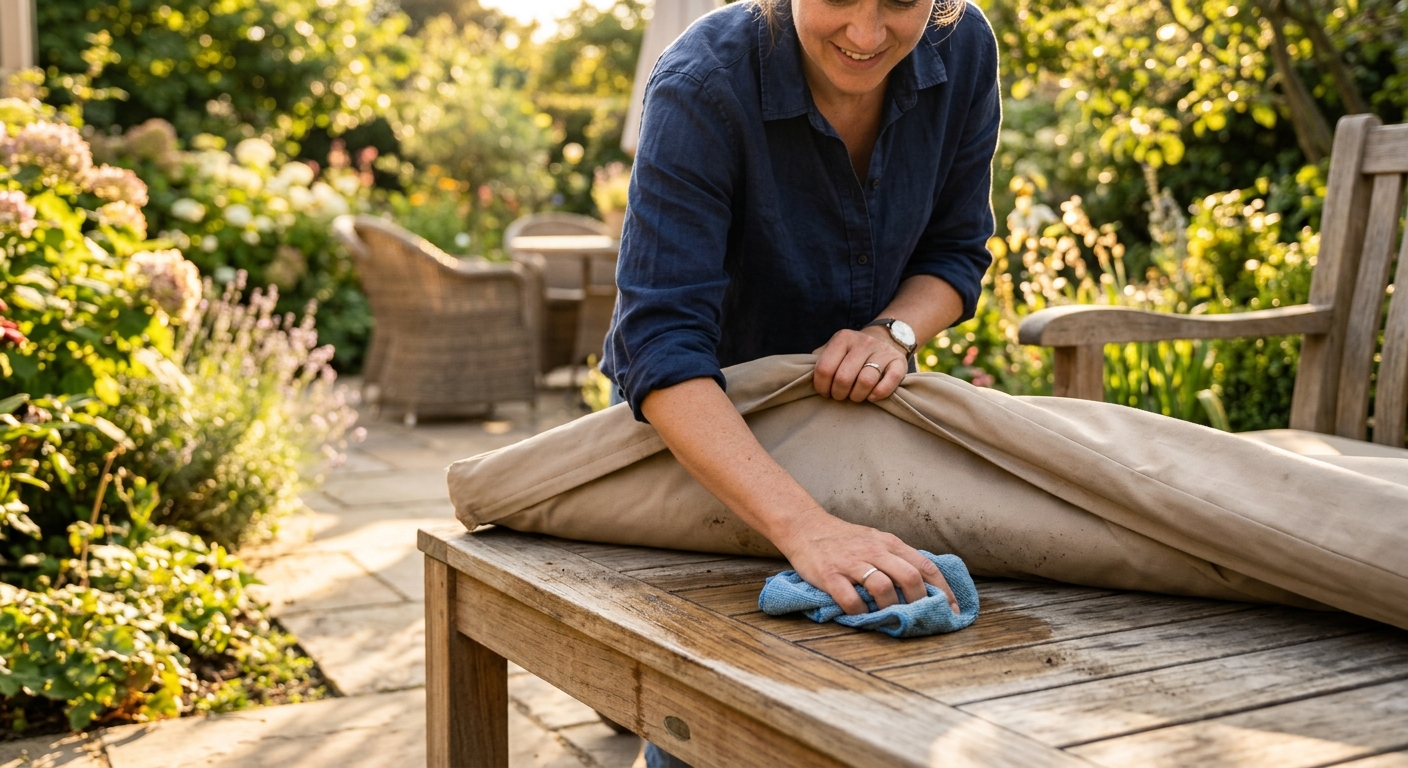
- Wipe down surfaces weekly to prevent pollen and dust buildup, which can trap moisture
- Rotate cushions if they are removable, to prevent uneven sun fading
Fall
- Deep clean all surfaces before covering for cooler weather
- Store cushions indoors if possible, even with covers on furniture
- Inspect grill covers for wear before the season of heavier holiday use
Winter
- Use heavy-duty, insulated covers for anything left outdoors
- Store lightweight furniture indoors or in a shed when possible
- Check covers periodically after snow or ice storms for pooling weight that could tear fabric
Grills and Fire Pits Need Special Attention
A grill left uncovered accumulates grease residue mixed with rain and dust, which is far harder to clean than dry residue and accelerates rust on burners and grates. A fitted, weatherproof grill cover extends the functional life of a grill by years. The same logic applies to fire pits — a round, fitted cover keeps rainwater from pooling inside the pit and rusting the interior surface.
Real-Life Example
Consider two identical gas grills purchased the same summer. One is covered every time it is not in use; the other is left exposed "because it's only a few hours." After two years, the covered grill still has intact grates and a clean exterior. The uncovered one has visible rust along the lid hinges and a burner that needs replacing. The only difference was a $35 cover used consistently.
Pro Tip
Choose covers with a drawstring or elastic hem rather than just a loose drape. Wind is one of the most common reasons outdoor covers fail — a cover that blows off during a storm offers zero protection exactly when it is needed most.
Conclusion
Outdoor furniture care is not complicated, but it does require consistency. Covering furniture, grills, and fire pits whenever they are not in use, combined with a simple seasonal cleaning routine, is enough to add years to the life of an outdoor setup. The upfront cost of quality covers is minor compared to replacing weather-damaged furniture every few seasons.
Check out our outdoor furniture cover collection to find the right fit for your patio set, grill, or fire pit.
Material-Specific Considerations
Not all outdoor furniture materials age the same way, and covers should be chosen with the specific material in mind.
- Wicker and rattan — prone to drying out and becoming brittle in direct sun; benefit most from full coverage during dry, hot stretches
- Metal frames — most vulnerable to rust at joints and screws; covers should fit snugly to avoid trapped condensation
- Wood furniture — needs breathable covers to avoid trapping moisture that leads to rot or mold, along with periodic resealing or oiling
- Cushions and fabric — the most vulnerable to UV fading and should be stored indoors or under cover whenever possible, even more so than the frames themselves
Matching your cover choice to your specific furniture material, rather than buying generically, makes a noticeable difference in how well the furniture holds up season after season.